Off the beaten track
The Fuerteventura
the tourist guides forgot
Just fifteen minutes from the villa, tucked along a rough coastal track on Fuerteventura’s wild north shore, Majanicho is the kind of place that makes you wonder how it’s still here. No hotels. No souvenir shops. No beach bars. Just whitewashed houses stacked on black volcanic rock, a handful of fishing boats rocking in the bay, and a silence broken only by the Atlantic wind. A visit here feels less like a day trip and more like a small act of discovery.
The journey
The Road In
Part of Majanicho’s charm is the approach. From Corralejo, you follow the tarmac as far as it goes, then surrender to a wide dirt track that cuts across a bare volcanic plain — open sky in every direction, dark lava fields stretching to the horizon, not a building in sight. It feels like the edge of the world before the village suddenly appears below you. A standard car handles the track fine; just take it slowly and enjoy the drama of the landscape unfolding around you.
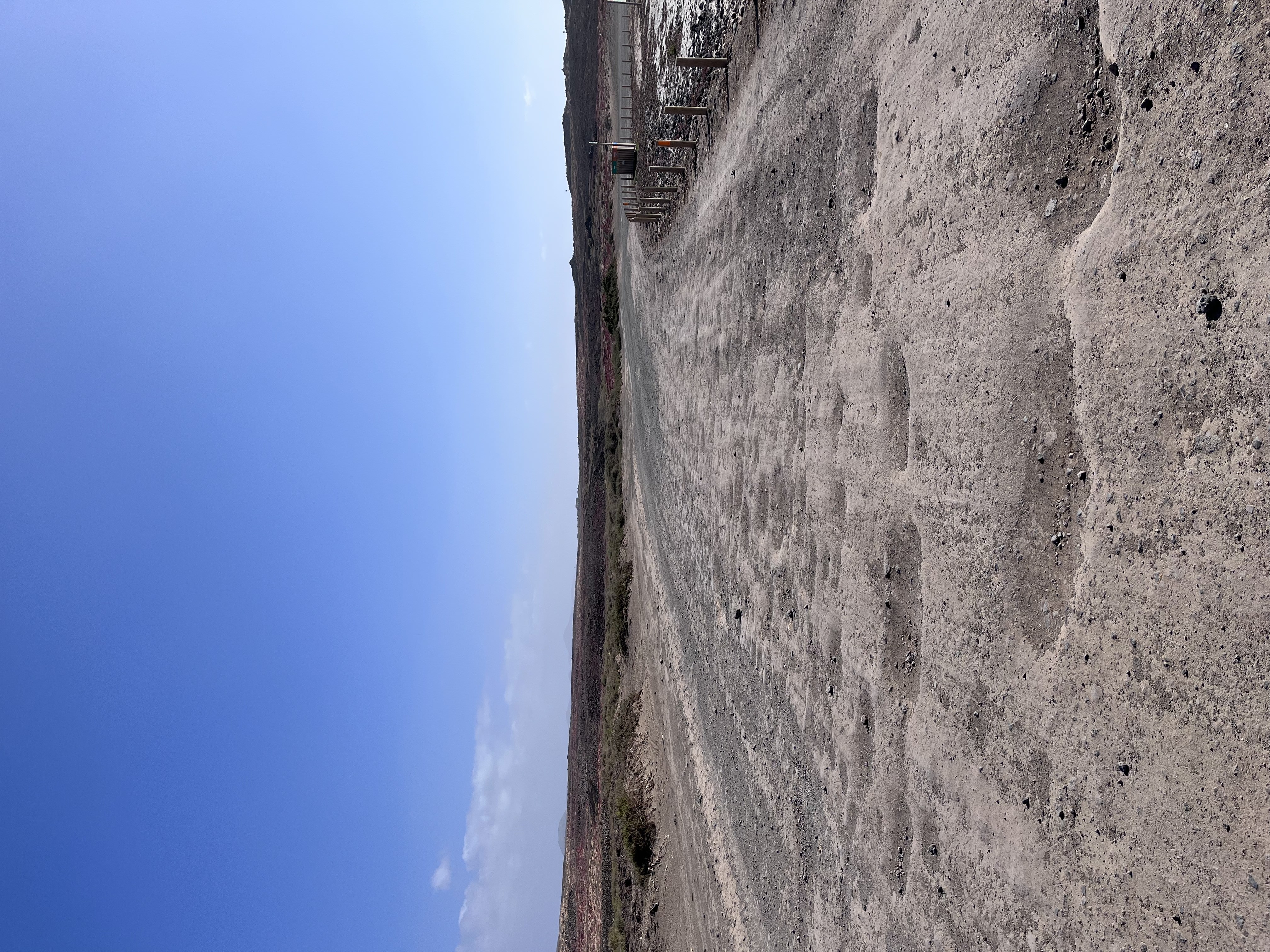
The approach road to Majanicho — bare volcanic plain, boundless sky, and not another soul in sight.
The village
A Village Out of Time
Majanicho is home to around 130 people. Its whitewashed houses — many with the vivid blue or green doors and windows typical of the Canary Islands — tumble down towards the bay in a loose cluster that you can walk from one end to the other in under ten minutes. The village has its roots in seasonal fishing, and that spirit hasn’t gone anywhere. Weathered boats are pulled up between the houses. Fishing nets spill over low walls. Old lobster floats and buoys decorate doorways. There are no restaurants, no cafés, no shops — just real life, lived quietly by the sea.
« In Majanicho, the centuries have passed without leaving much of a mark. The history and traditions of the Majoreros — the people of Fuerteventura — are still alive here, intact. »
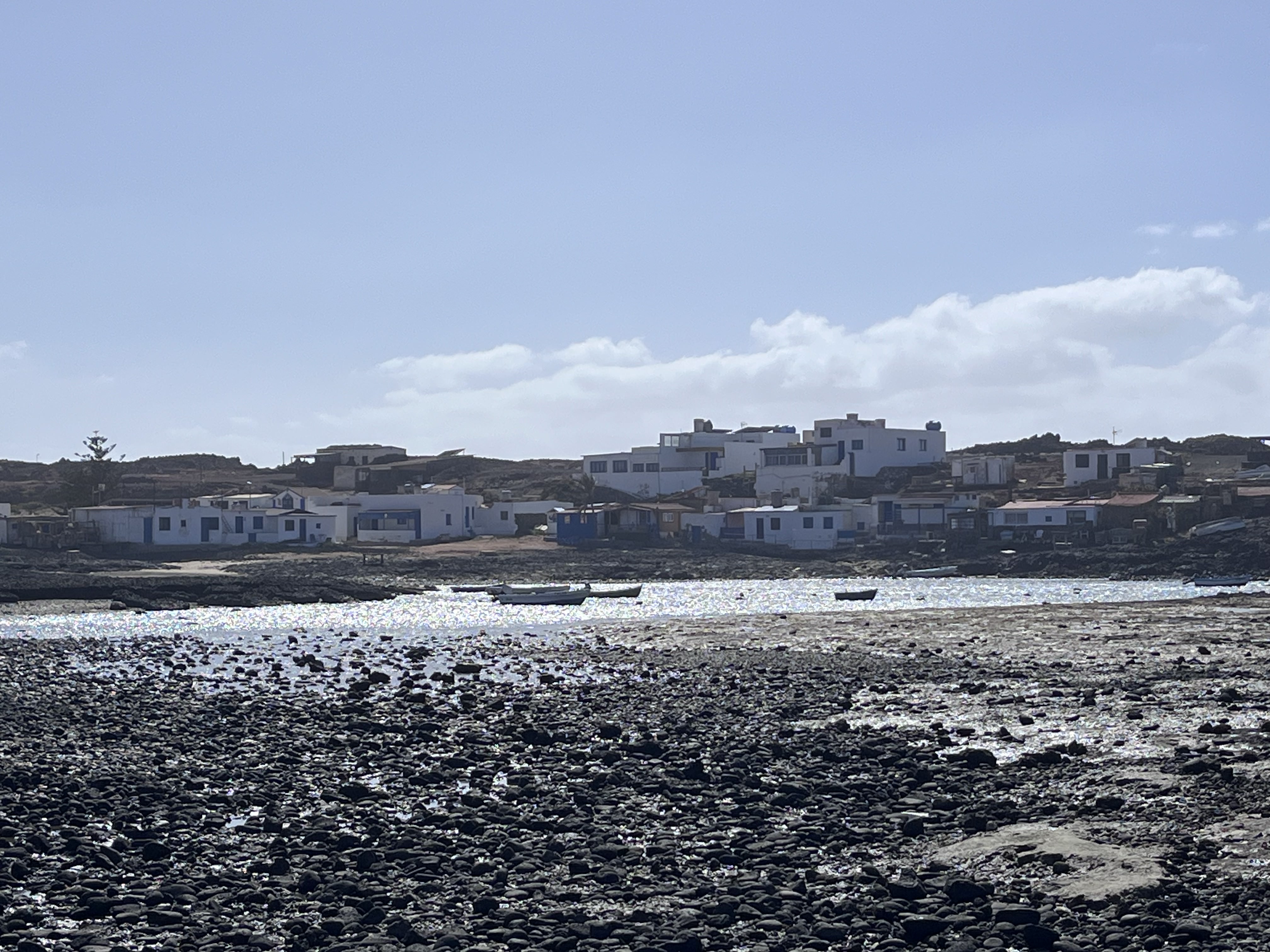
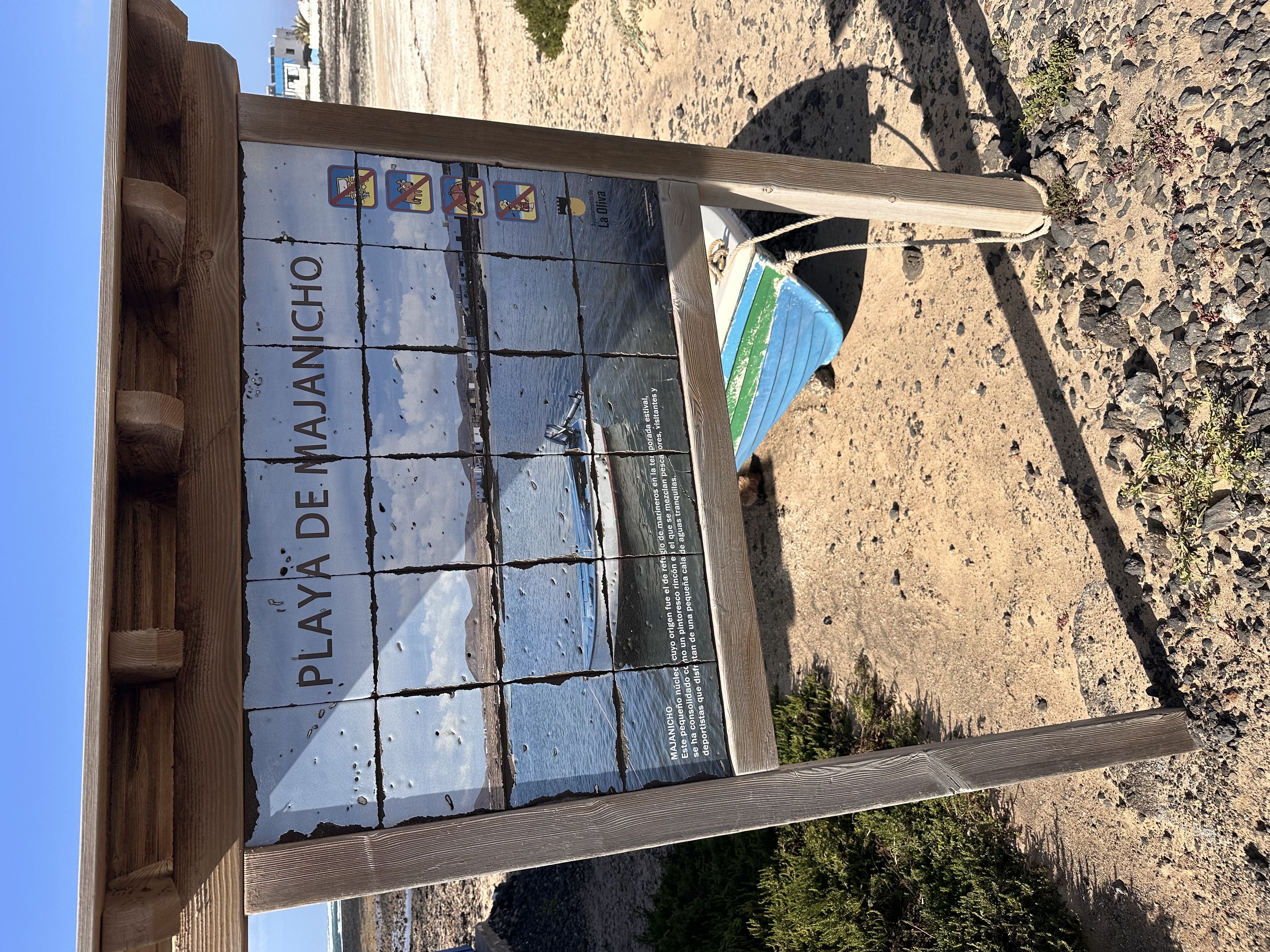
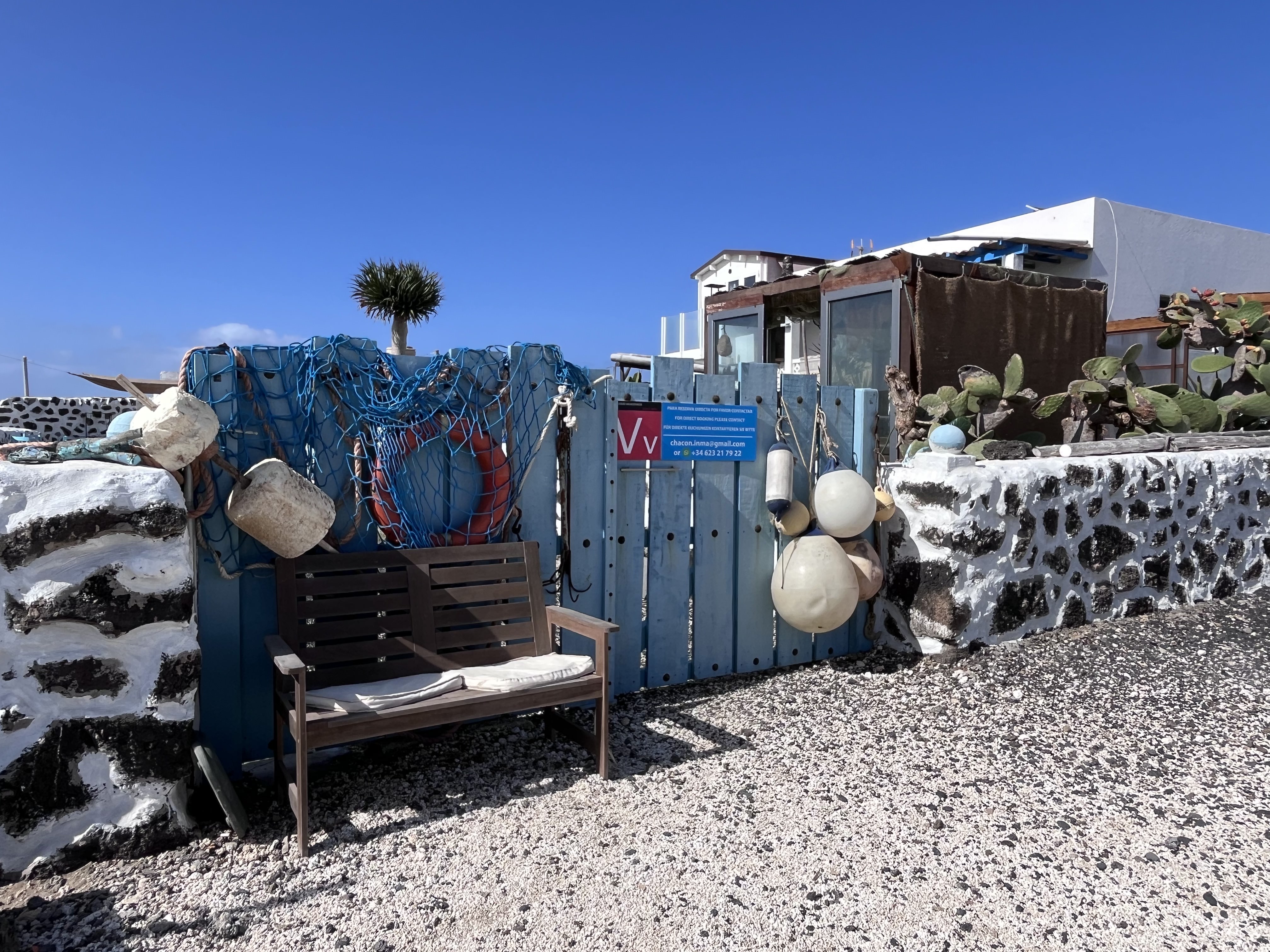
Left: the village rises from the volcanic shoreline. Right: fishing culture decorates even the front gates.
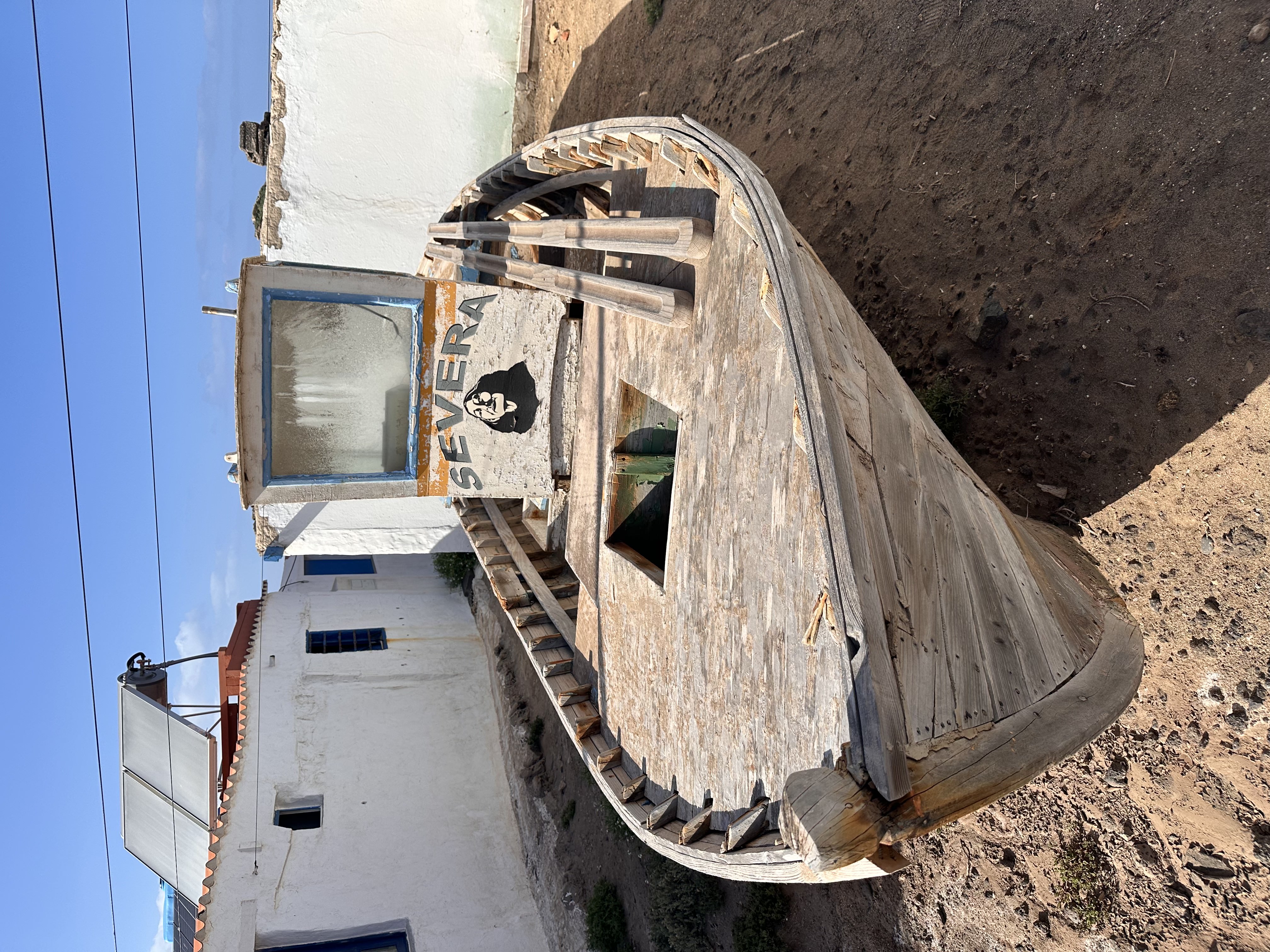
The old fishing boat « Severa » — a relic of the village’s working past, resting between two whitewashed homes.
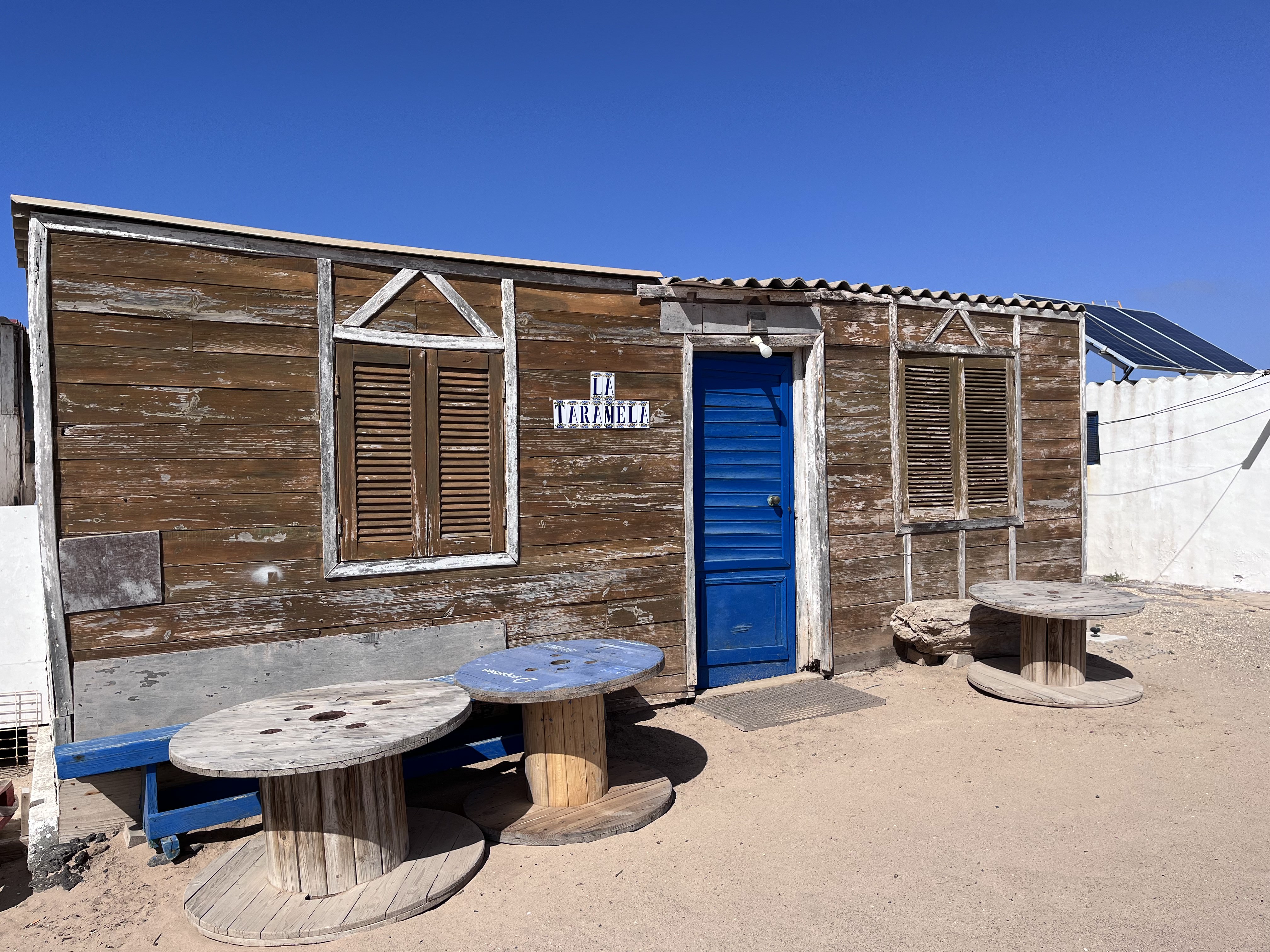
« La Taramela » — the village’s one gathering place, with cable-drum tables and a bright blue door.
The sea
The Bay & the Shore
The bay at Majanicho is like nothing else on the island. The beach itself is not a classic golden sand affair — it’s a raw, striking mix of pale shell-gravel, dark volcanic rock shelves, and, in the centre of the cove, a stretch of sand that fills with water so transparent it seems barely there. Small fishing boats sit moored on the glassy surface as if floating on air. At low tide, the volcanic reef is exposed and you can walk out to the famous fish-cleaning table — a small wooden workbench anchored on the rocks where local fishermen have brought their catch for generations. It is a simple, oddly moving sight.
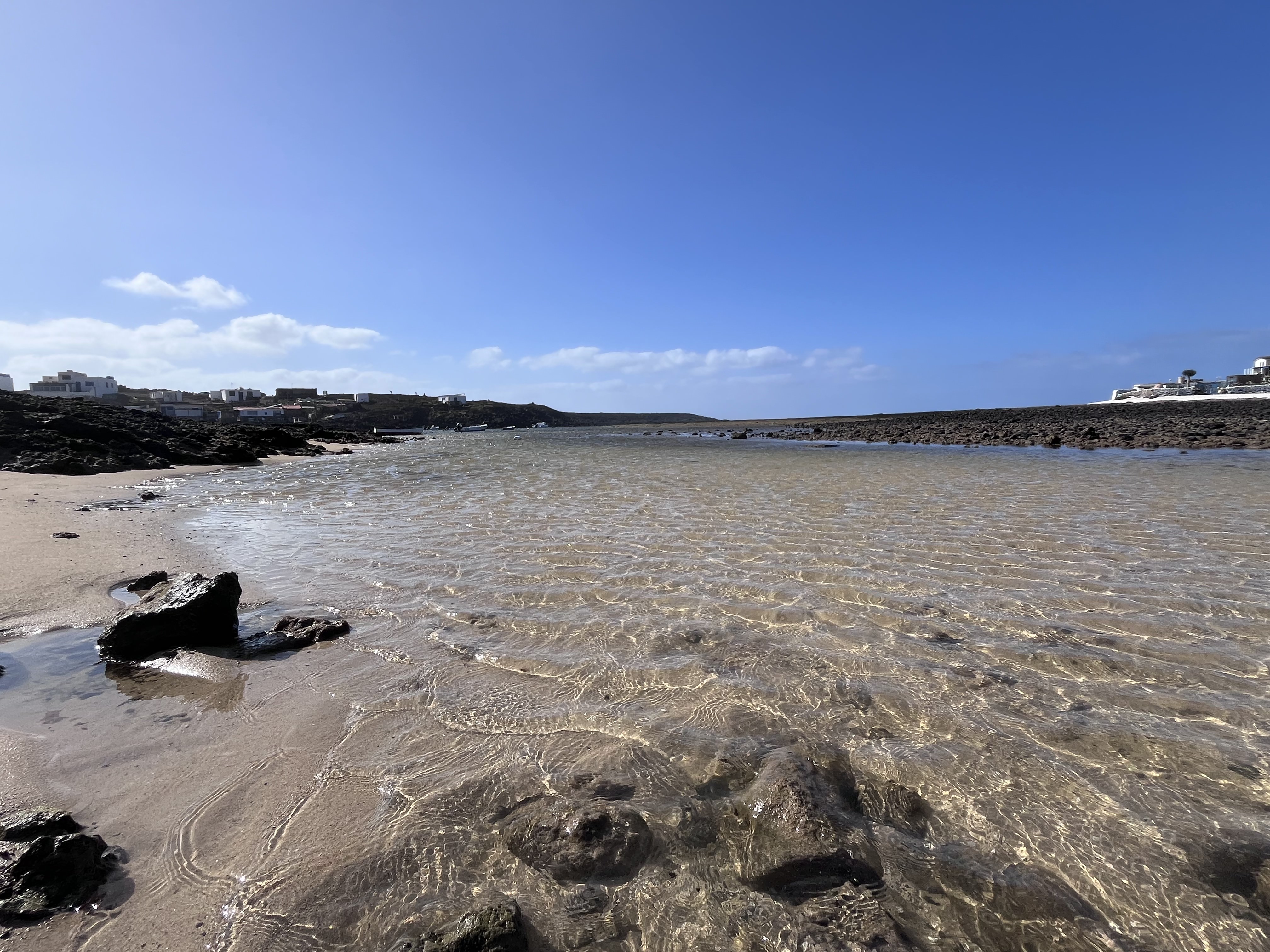
The water in the bay is extraordinarily clear — calm, shallow, and unspoilt.
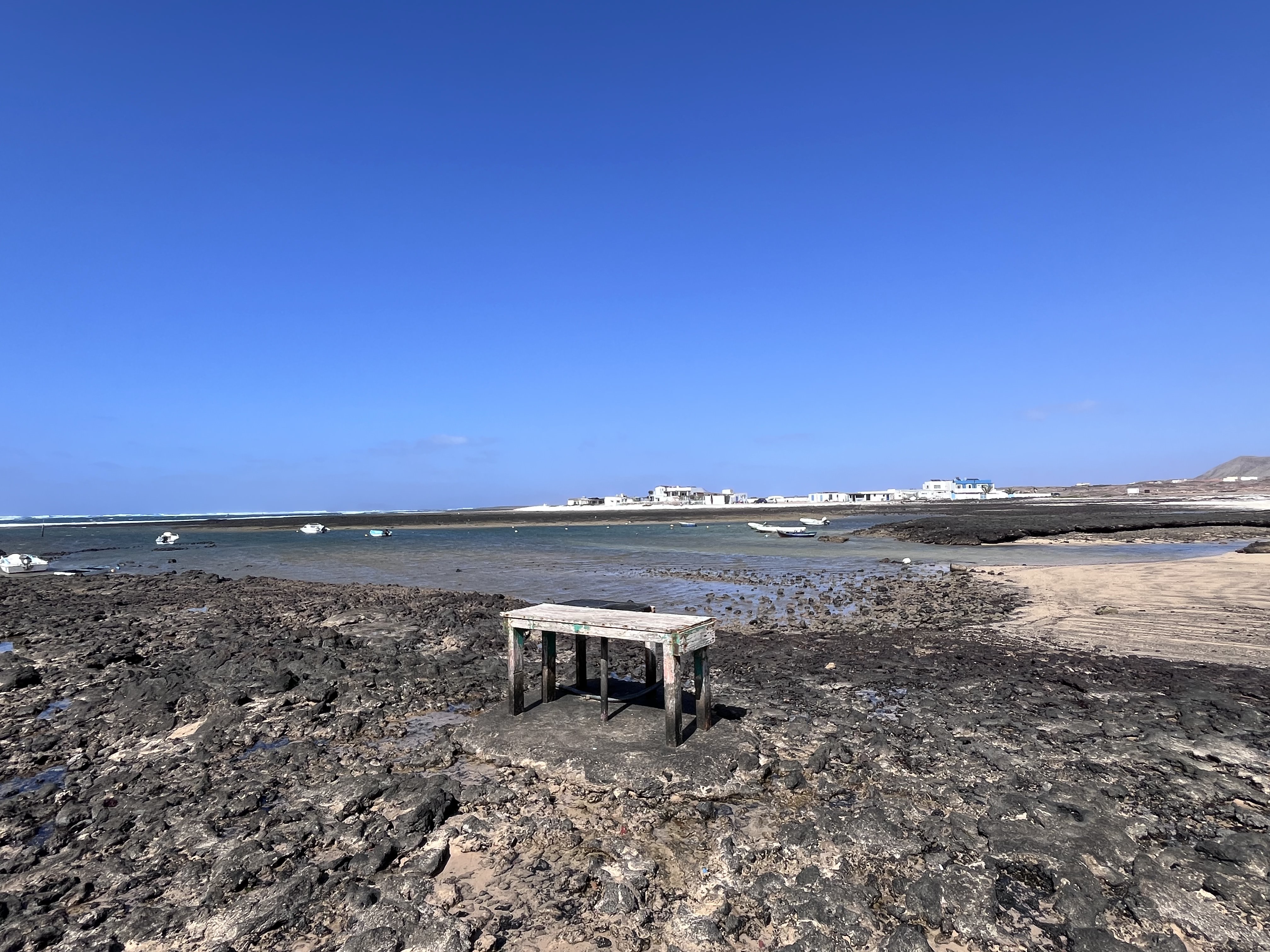
The fish-cleaning table — still in use by local fishermen today.
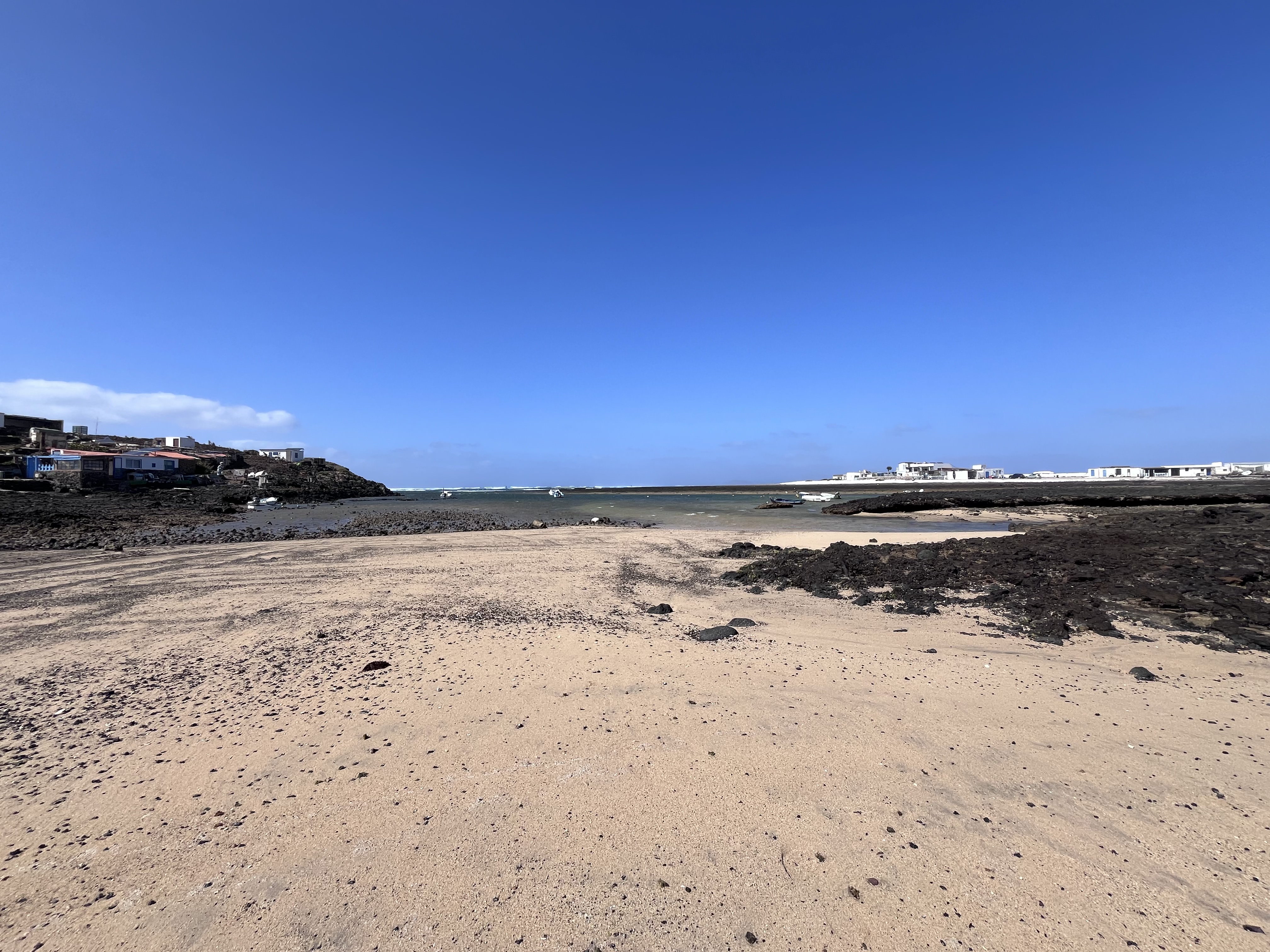
The bay opens wide, flanked by two headlands of white buildings and black rock.
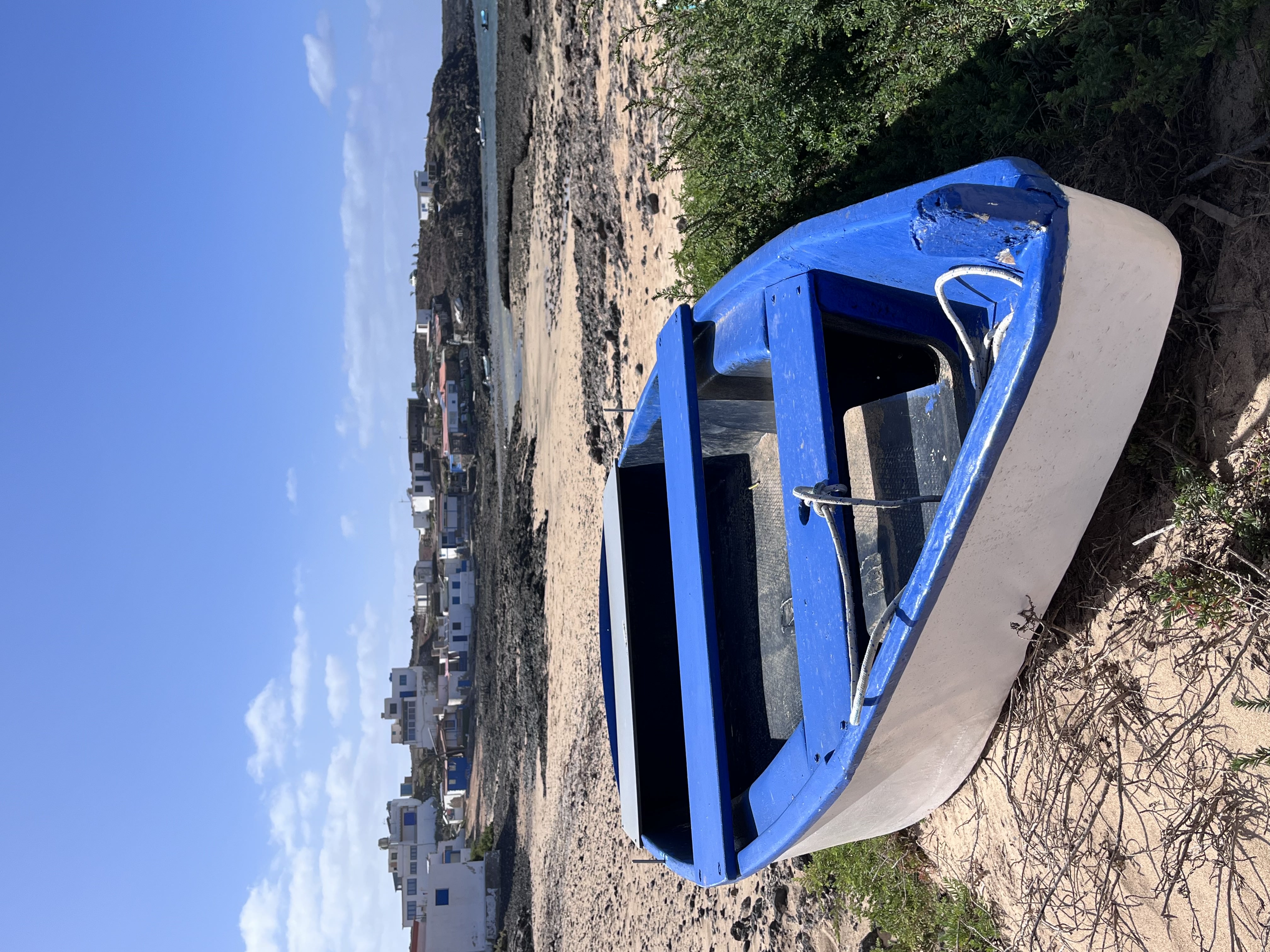
Brightly painted boats are part of the landscape here.
The landscape
Volcanic Beauty
What makes Majanicho genuinely unforgettable — beyond the village itself — is the landscape it sits in. The shoreline is not sand in any conventional sense. It shifts between stretches of pale, almost-white crushed shell and coral gravel, and broad shelves of dark, pitted volcanic rock that slope into the sea. The contrast is extreme and beautiful: white and black, soft and jagged, silent and wind-battered. Looking out from the shell-gravel shore, with Atlantic waves breaking on the reef in the distance and not a parasol or sunbed in sight, you get a rare sense of Fuerteventura’s wild, geological soul.
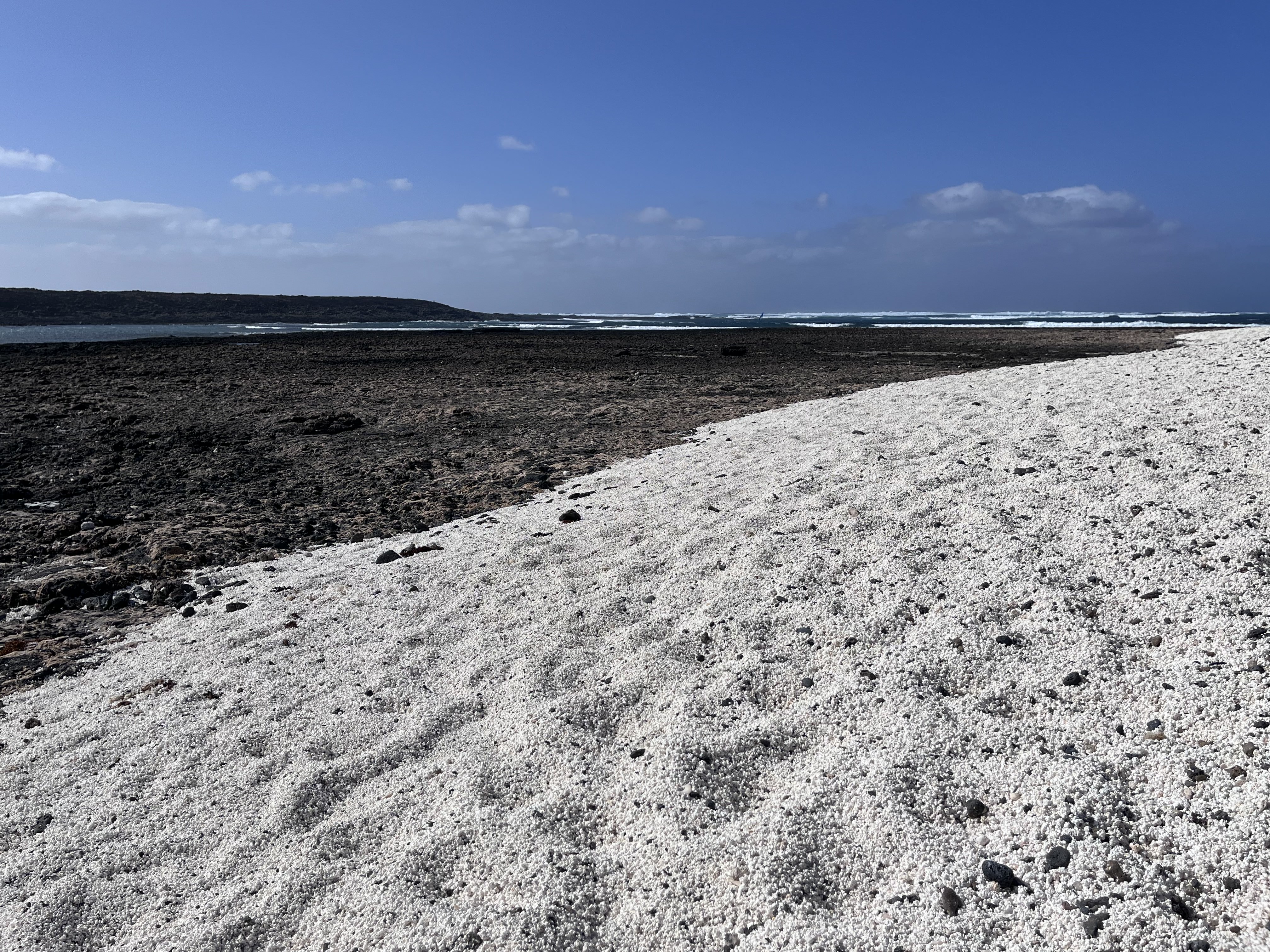
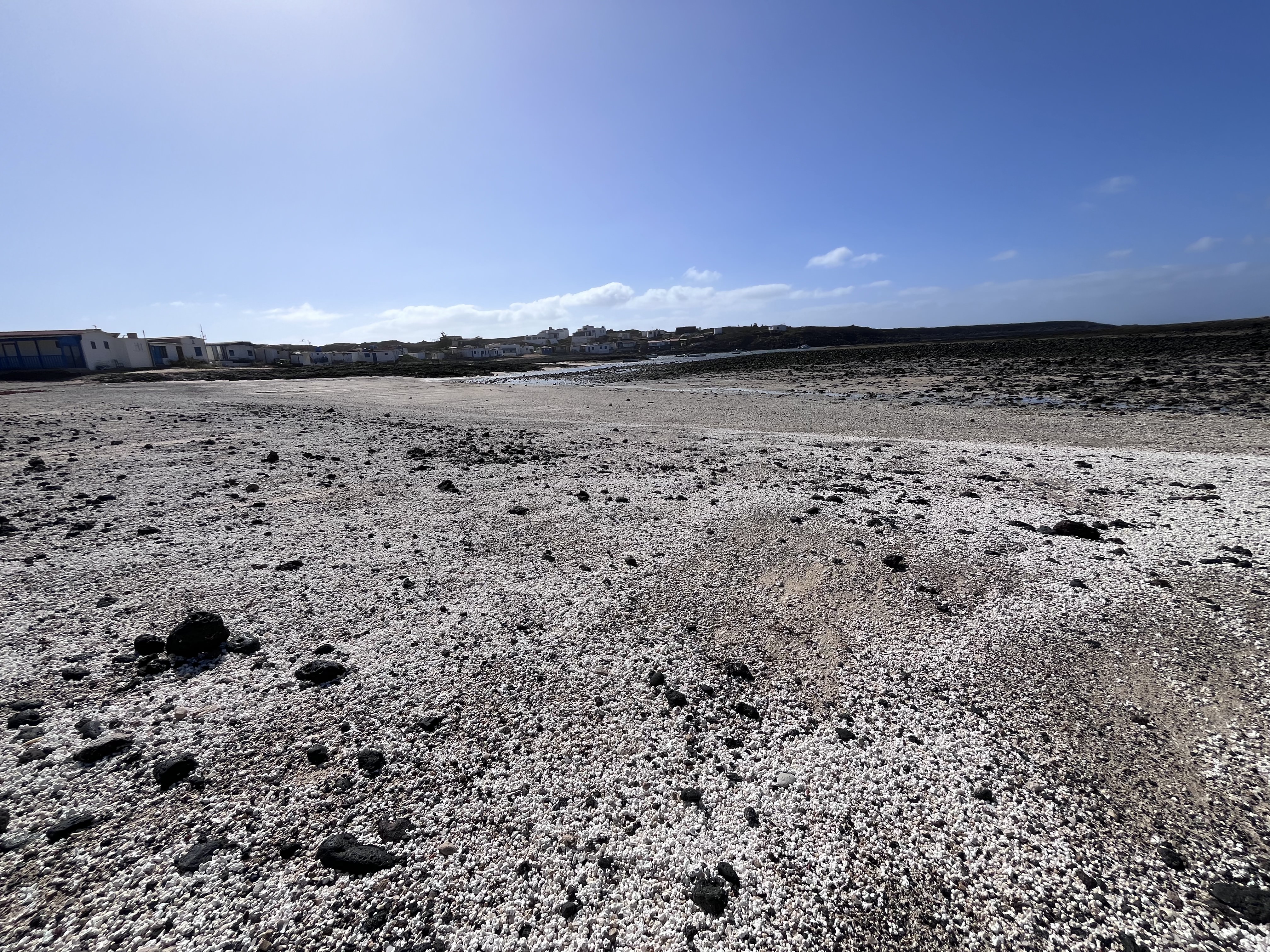
The landscape around Majanicho shifts between white crushed shell and jet-black volcanic rock — unlike anywhere else on the island.
For the adventurous
Surf, Wind & Waves
While the sheltered bay is calm enough for a gentle paddle or snorkel on quieter days, Majanicho is well known among the surfing and water sports community as a gateway to some of Fuerteventura’s best breaks. The north coast reef produces powerful Atlantic swells — the bay itself has a semi-fast hollow right-hander that peels across the volcanic reef, and a dirt track connects surfers to further breaks east and west along the coast. In summer, kiters and wing foilers take over. It’s not the place to learn, but it is the place to watch, if you want to see the island at its most raw and elemental.
Getting there
~15 min from Villa Solymar by car. Take the FV-1 north, then FV-109 toward Lajares. Just before Lajares, turn off for Majanicho — the last stretch is a wide dirt track passable by standard car.
What to bring
There are no shops, cafés, or restaurants in the village. Bring water, snacks, sunscreen, and a snorkel if you want to explore the bay. Shoes with grip are useful for the volcanic rock.
Best time to visit
The village is lovely year-round. Come in September for the annual Romería festival honouring Nuestra Señora del Pino — one of the most authentic local celebrations on the island.