A wild escape
The island
between two worlds
Barely four square kilometres, visible from the rooftops of Corralejo, yet feeling like the far end of the earth. Isla de Lobos sits in the narrow strait between Fuerteventura and Lanzarote, a protected natural park with no permanent inhabitants, no roads, and no noise beyond the wind and the sea. A short ferry crossing is all it takes to leave the modern world behind entirely.
The crossing
Getting There
The ferry departs from Corralejo harbour — just a 20-minute drive from Villa Solymar — and the crossing takes around 15 minutes. Book your tickets in advance online: the island is a protected natural park with a daily visitor limit, and the boats fill up quickly in high season. Ferries depart several times a day; check the current timetable before you go. The round trip is inexpensive and straightforward — just remember that the last boat back leaves in the early afternoon, so plan your day accordingly.
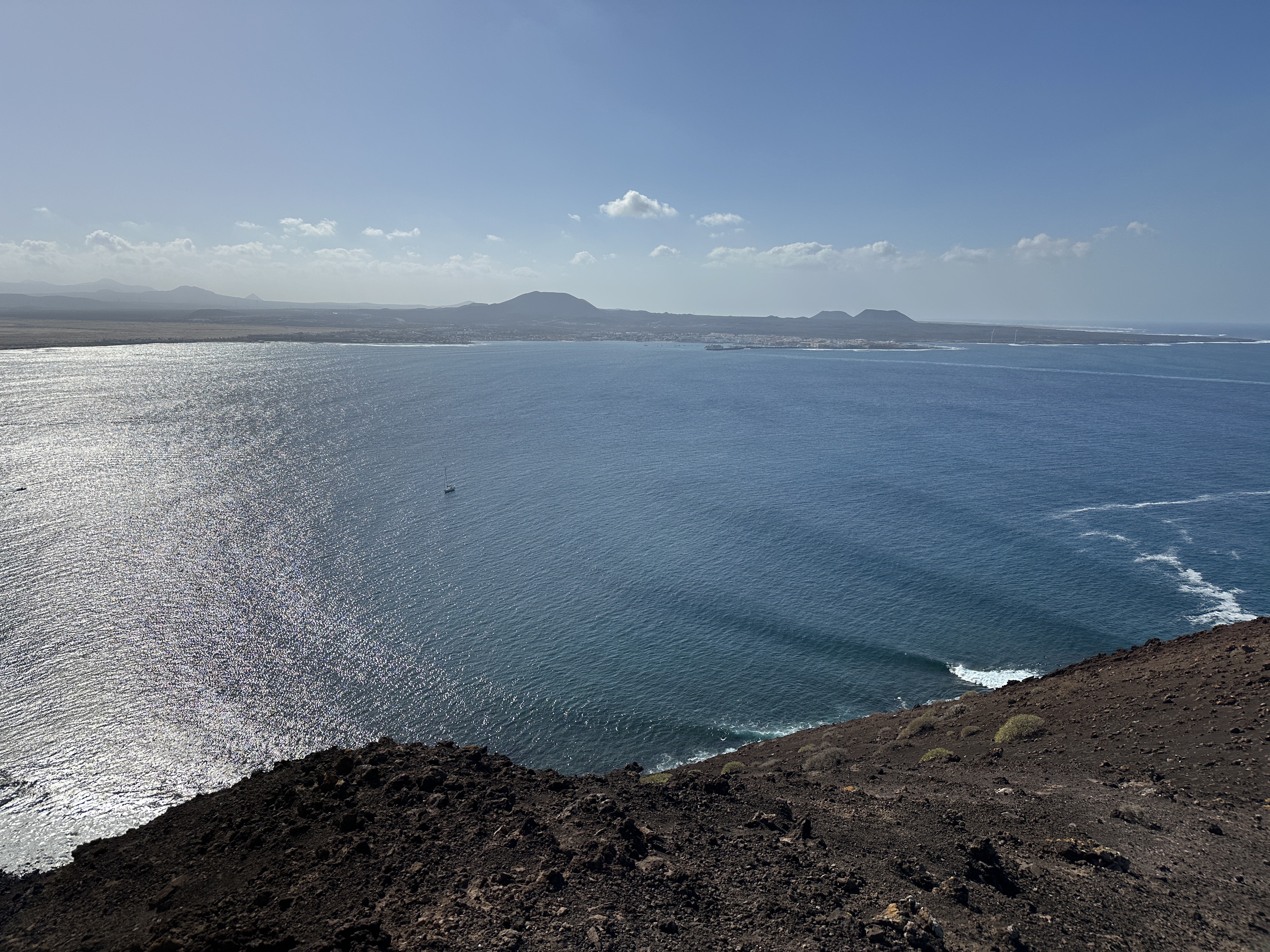
The view from the island back toward Corralejo — just 15 minutes across the water, but a world apart.
The island
A Volcanic World
Lobos was formed by volcanic eruptions and bears all the hallmarks of that fiery origin: fields of black lava rock (malpaís), volcanic cones, and a dramatic, jagged coastline where the Atlantic crashes against ancient basalt. The island takes its name from the monk seals — lobos marinos — that once gathered here in large numbers. They are long gone, but the island remains a sanctuary: a strict nature reserve protecting rare seabirds, endemic plants, and the extraordinary underwater world that surrounds it.
« Lobos is one of the few places in the Canary Islands where you can walk for an hour without seeing a single building, road, or telephone pole. »
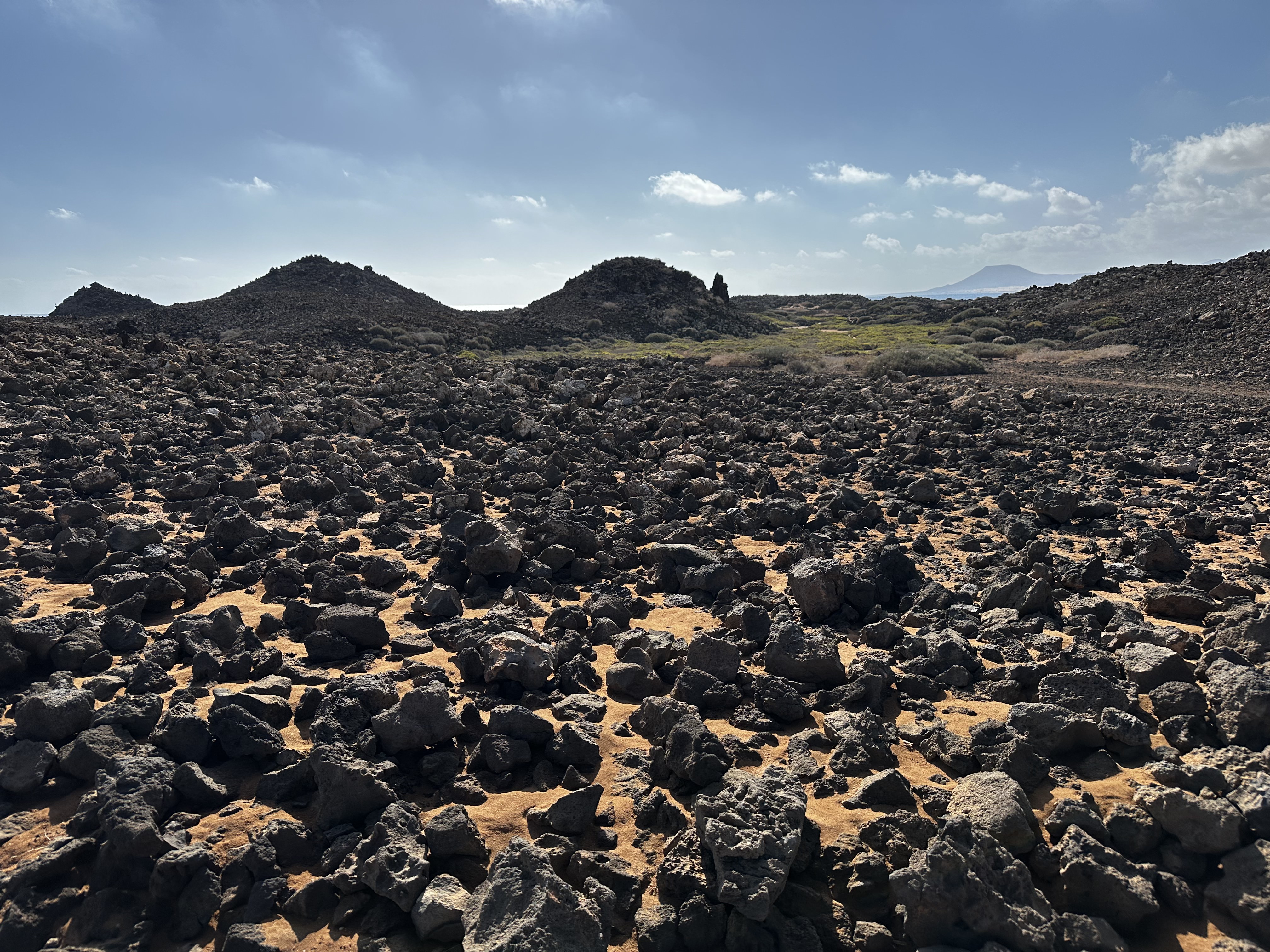
The malpaís — ancient lava fields that give the island its otherworldly character.
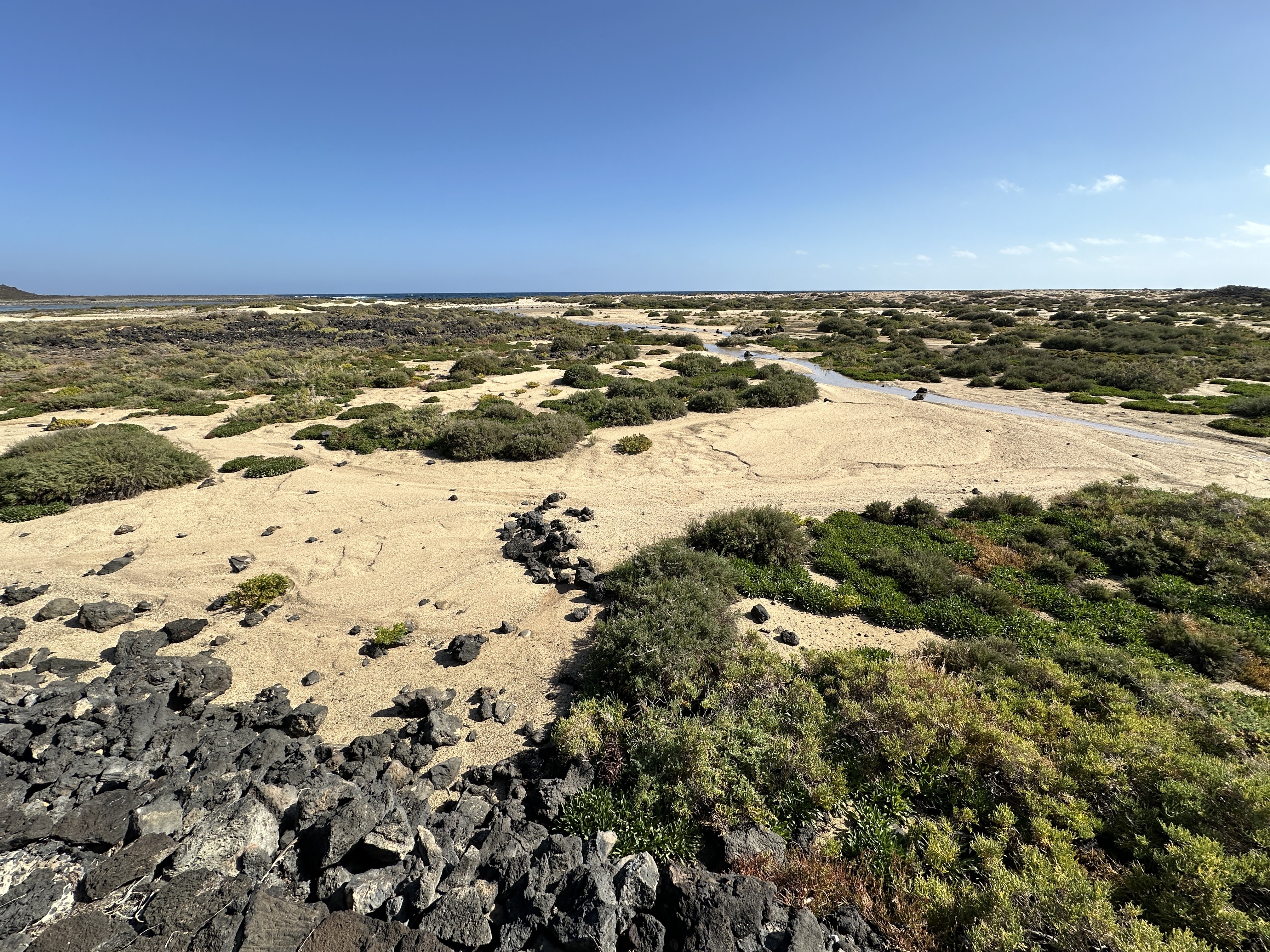
The island’s sheltered interior — sand, scrub, and an absolute, restorative silence.
The water
The Lagoon
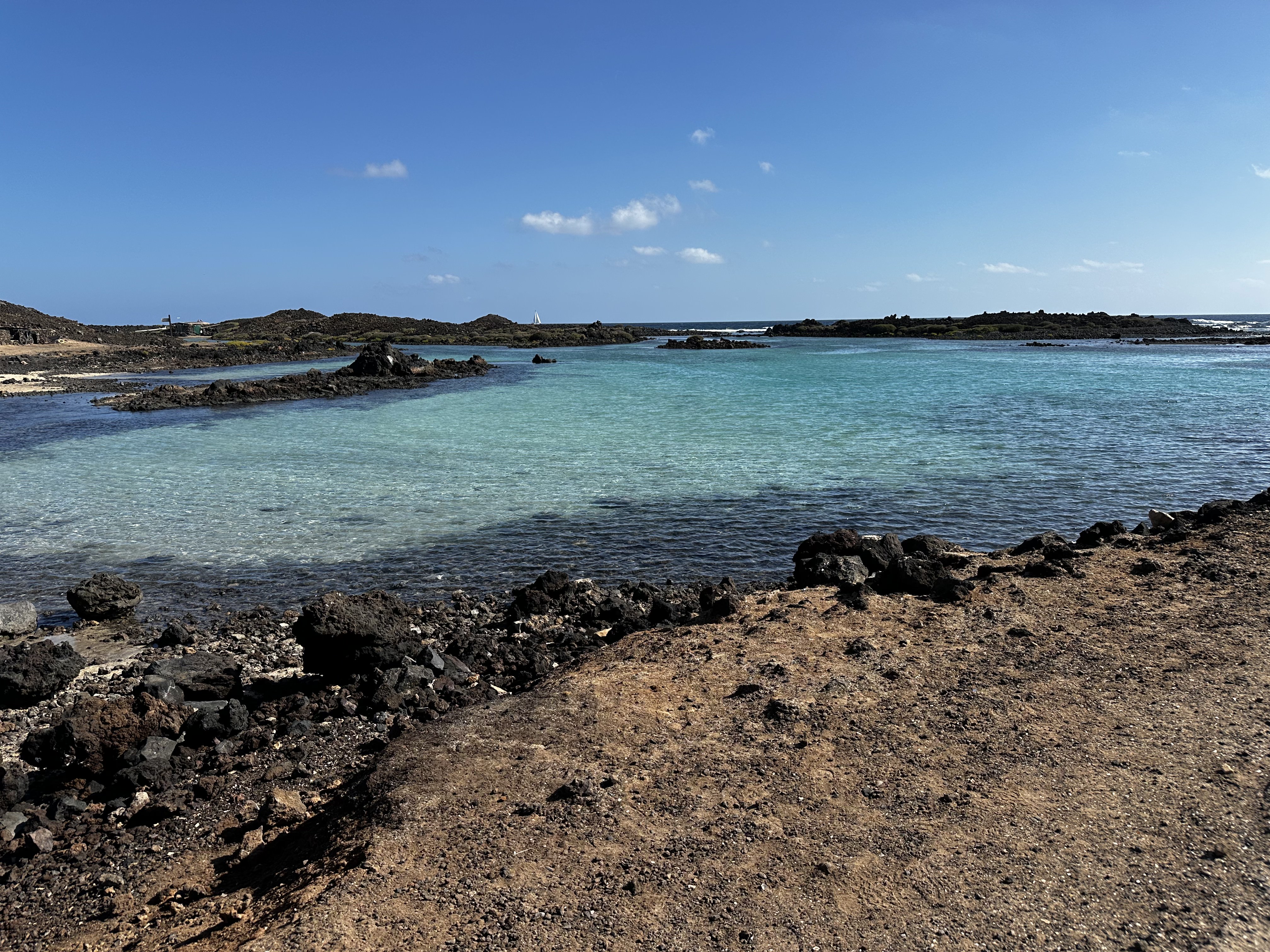
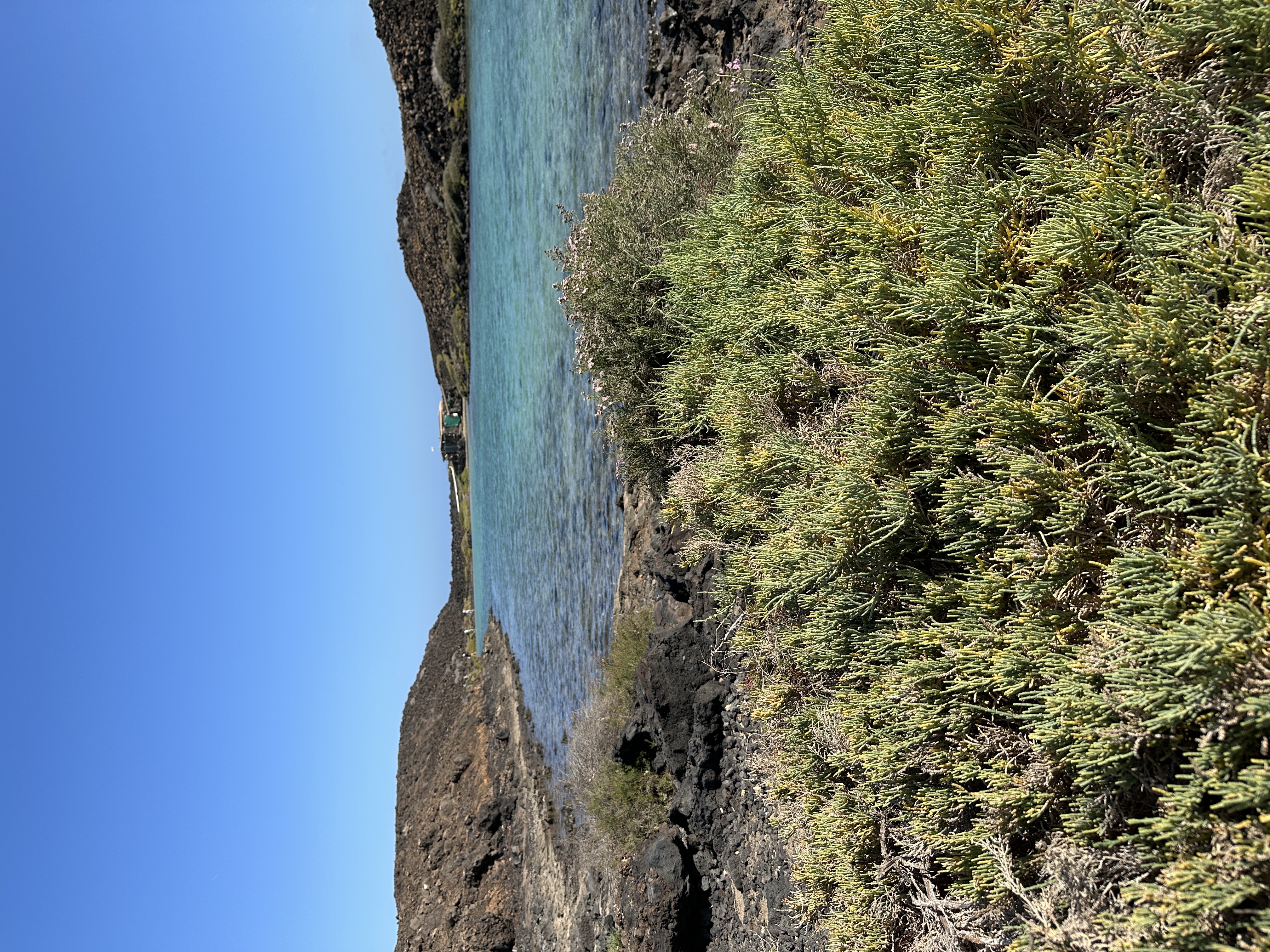
The island’s most famous feature is its natural lagoon — a sheltered pool of extraordinary, almost impossibly clear water enclosed by volcanic rock. The colour shifts from pale turquoise at the edges to deep sapphire further out, and visibility underwater is exceptional. It is one of the best free snorkelling spots in the Canary Islands: calm, clear, and teeming with marine life including sea turtles, rays, and hundreds of species of fish. Bring your mask — you will not regret it.
The lagoon — one of the clearest and most biodiverse snorkelling spots in the entire archipelago.
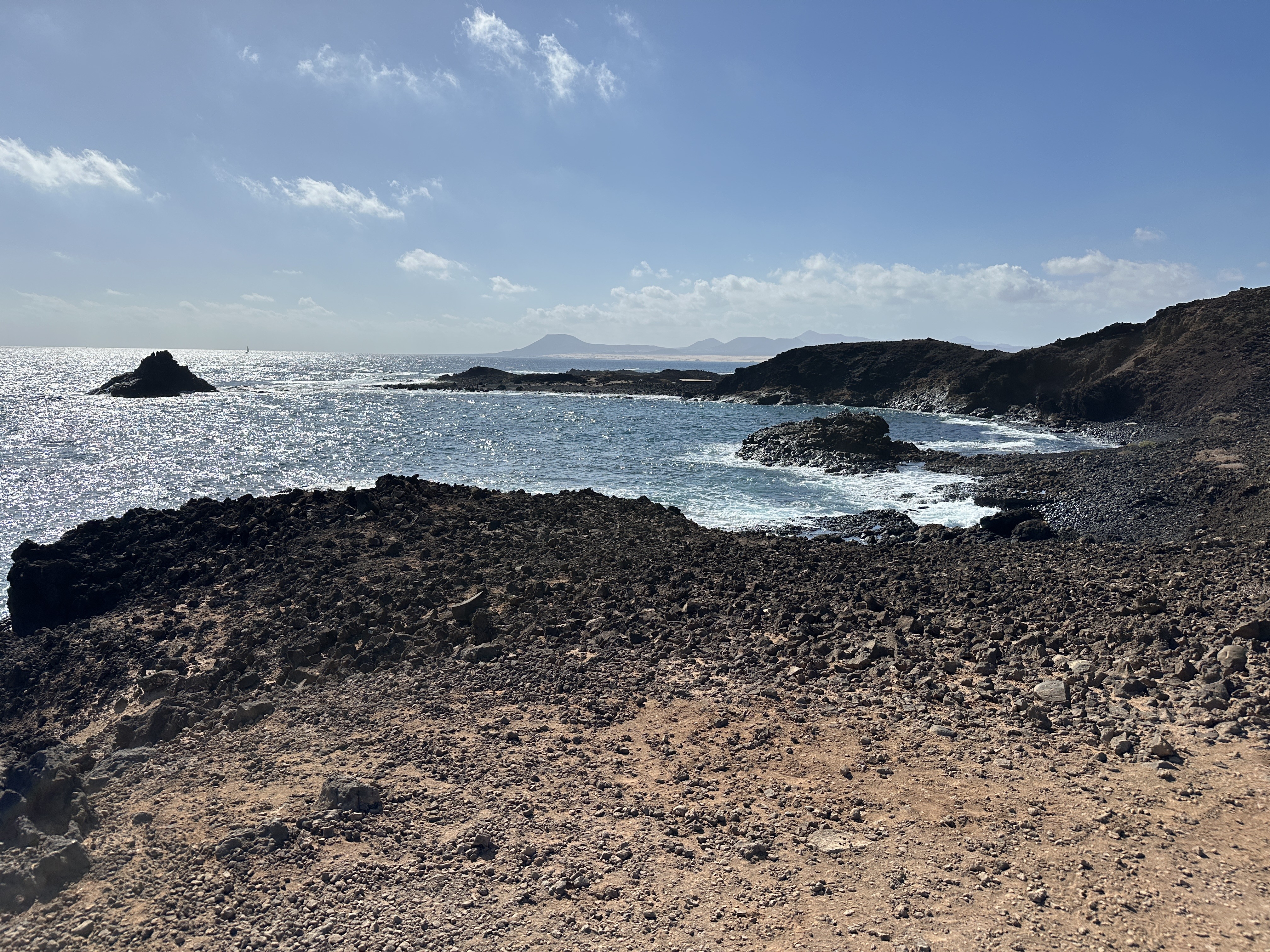
The volcanic coastline frames pools of extraordinary clarity.
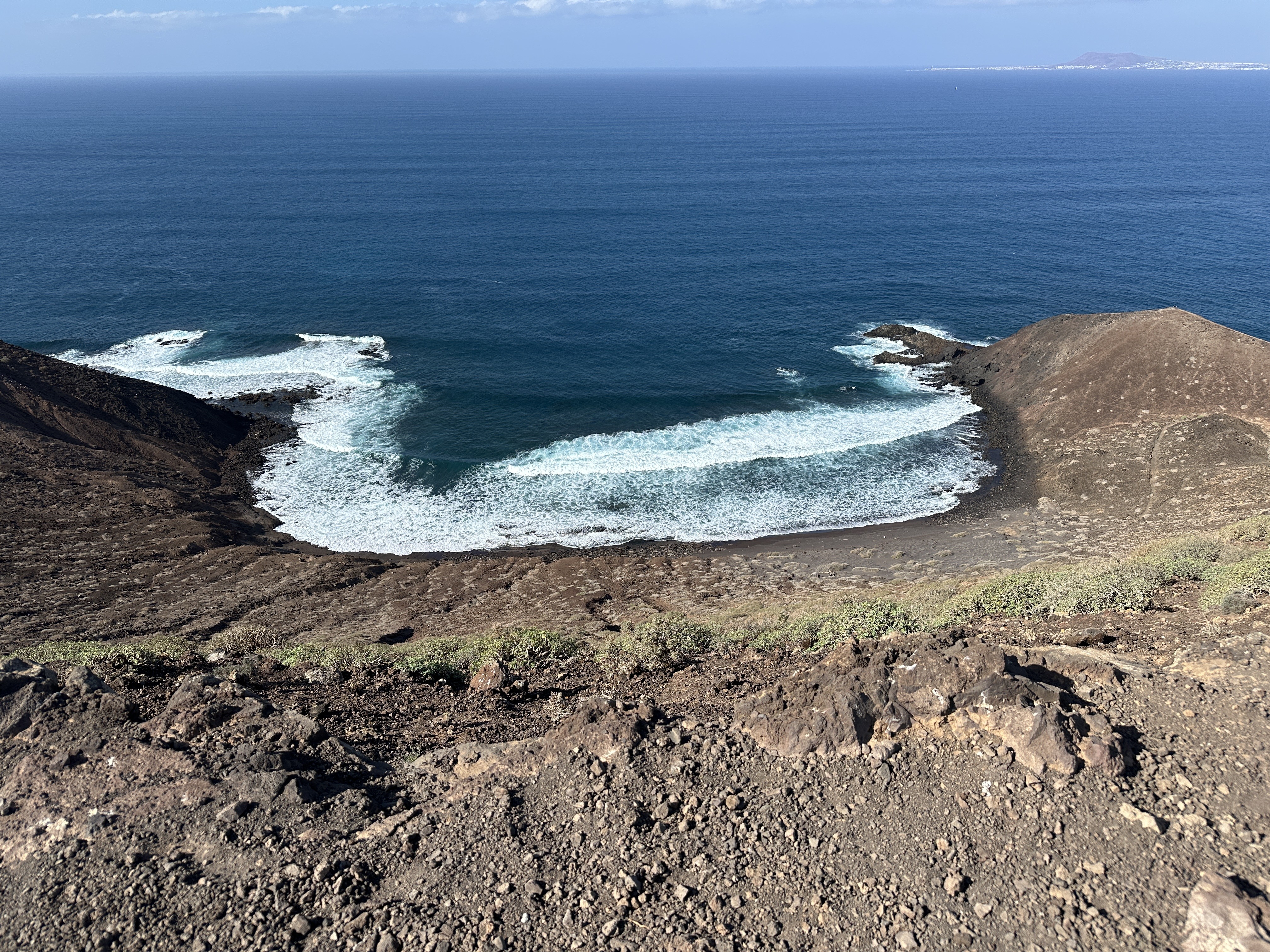
A natural cove on the island’s Atlantic-facing coast.
Where the island meets the open Atlantic.
The summit
La Caldera — The View
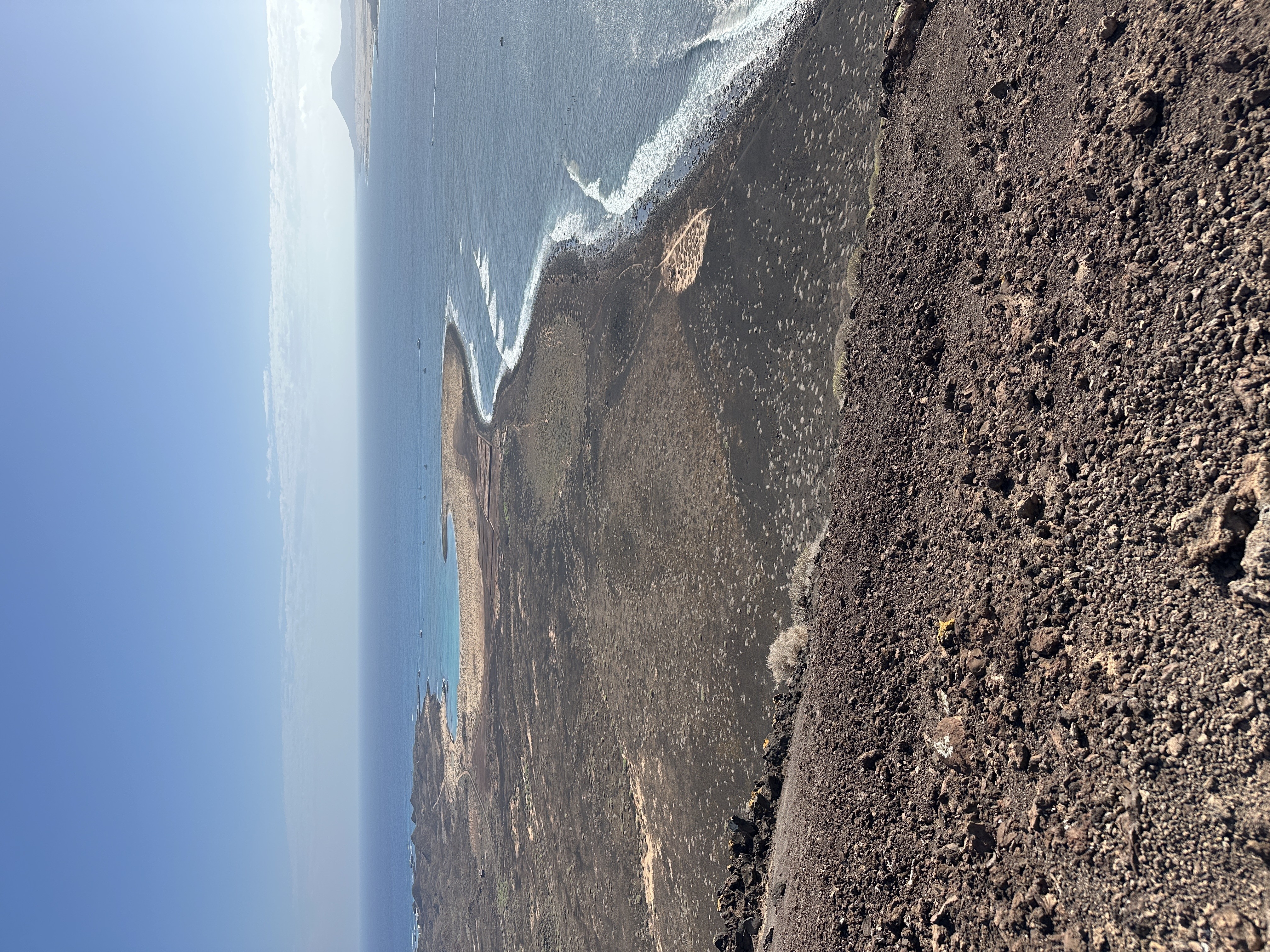
The island’s centrepiece is La Caldera, a small but perfectly formed volcanic cone rising to just over 120 metres. The walk up is short — under 30 minutes from the main landing area — but the reward at the top is extraordinary: a 360° panorama taking in the full width of the strait, the dunes of Corralejo to the south, and the volcanic peaks of Lanzarote to the north. On a clear day, you can see both islands simultaneously, and the scale of the geography becomes suddenly, almost dizzily clear.
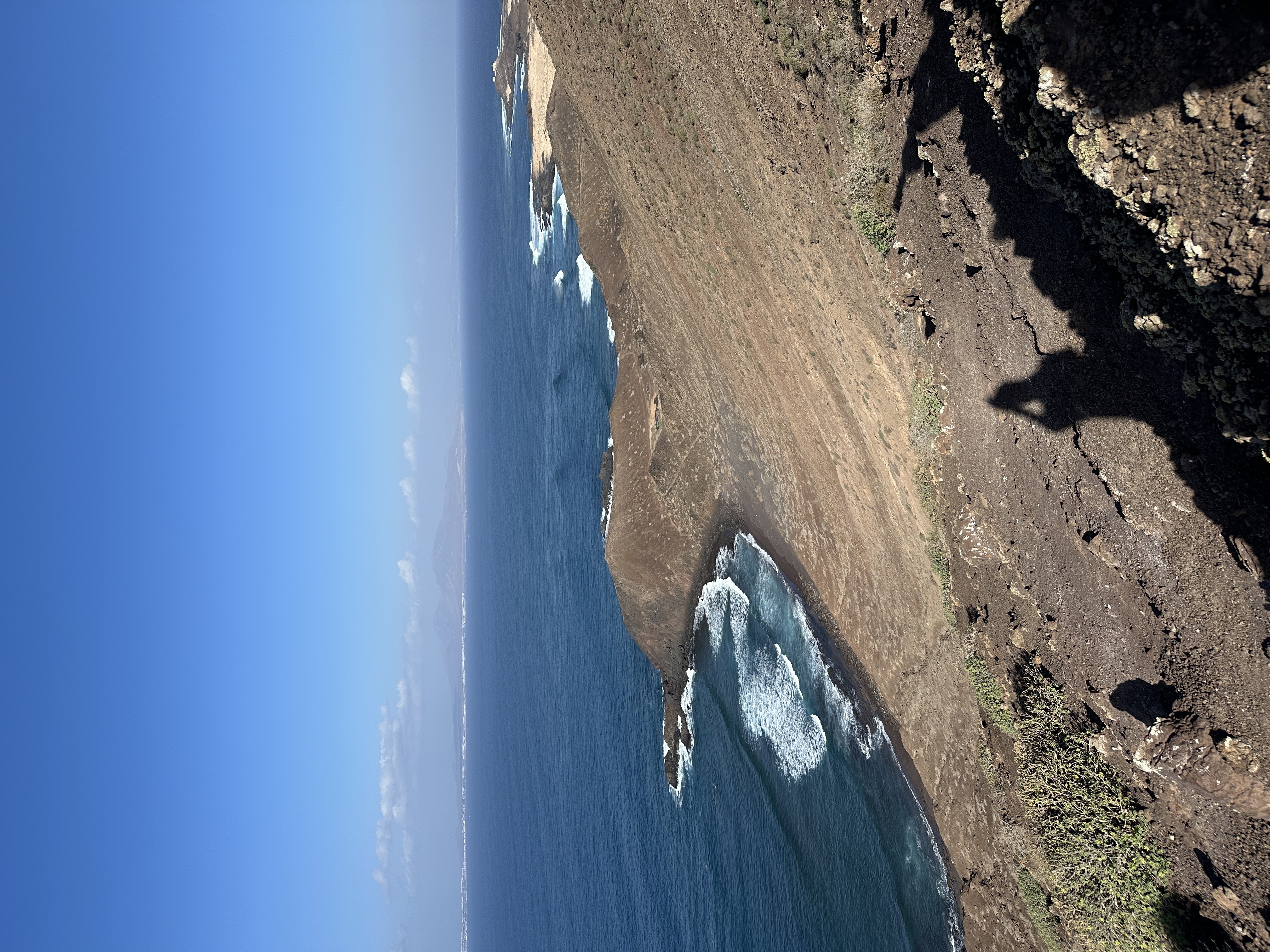
From the summit of La Caldera, the full geography of the strait comes into view — Fuerteventura behind you, Lanzarote ahead.
Food & drink
Bring Your Own Picnic
There is one restaurant on the island, located near the main landing jetty. It serves simple Canarian food and cold drinks — and on a hot day after a long walk, even a basic meal tastes like a feast. That said, be realistic about expectations.
A honest word of advice: the restaurant cannot be booked in advance, operates on a first-come basis, and the food quality is average at best. In high season, the wait can be long and the menu limited. We strongly recommend bringing your own food and drinks — a proper picnic, packed from the villa before you leave. The island has beautiful spots to eat in the shade, and you will eat better, spend less, and have more flexibility in your day.
Stock up at the supermarket in Corralejo the evening before: good bread, local cheese, jamón, fruit, and plenty of water. There is no shade on much of the island and the sun is intense — hydration matters more than you think.
Getting there
Ferry from Corralejo harbour, ~20 min from Villa Solymar by car. Crossing takes ~15 min. Book tickets online in advance — daily visitor numbers are capped. Check current timetables as schedules vary by season.
What to bring
Bring your own food and water — the one restaurant is average and cannot be booked. Also: snorkel & mask, sunscreen, a hat, and sturdy shoes for the lava trails. The sun is relentless.
Good to know
The last ferry back leaves in the early-to-mid afternoon — don’t miss it. Entry to the island is free. Stay on marked paths: the ecosystem is fragile and protected. Dogs are not permitted.